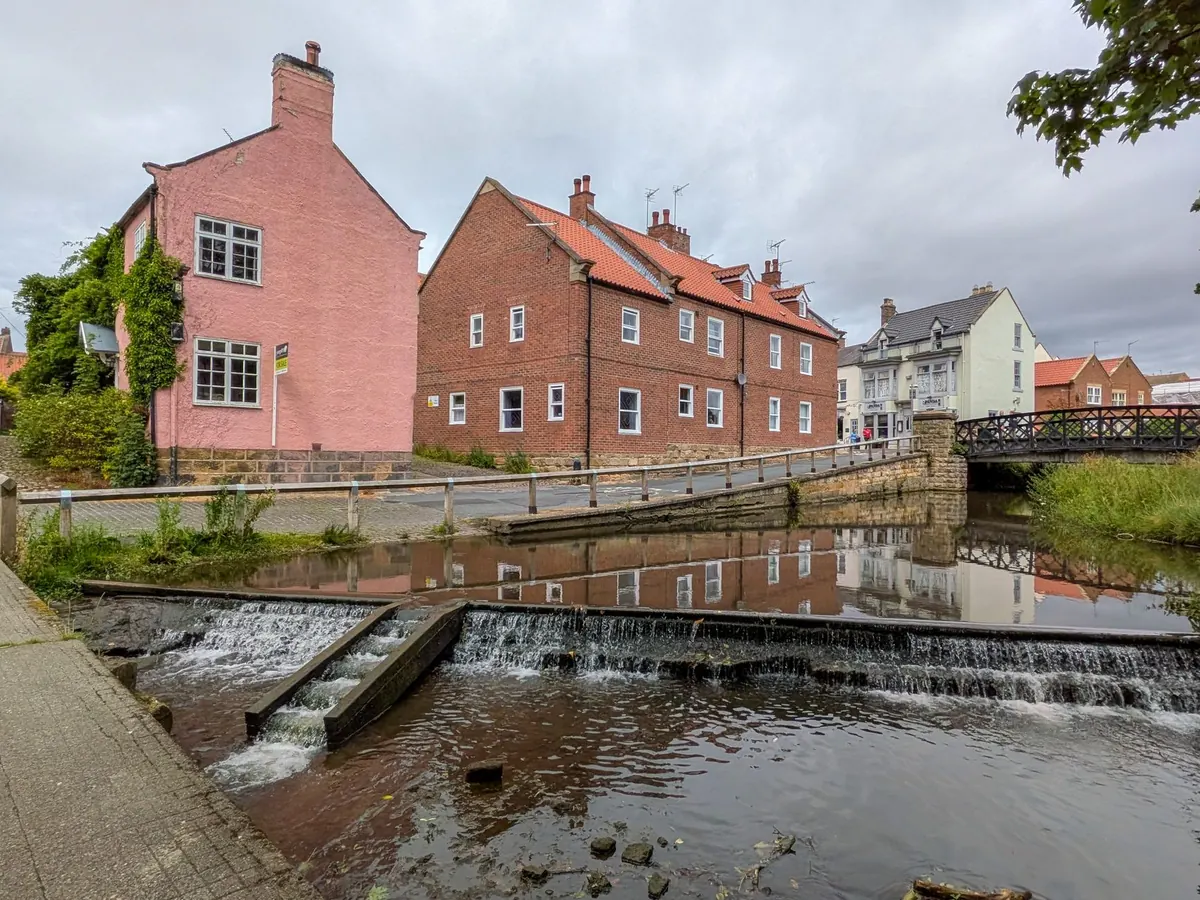
Choosing a town in Kent is a different job from choosing a house. The county stretches from the Thames estuary down to Romney Marsh, and two towns twenty minutes apart can feel like they belong to different counties. A street that looks perfect on a property listing at nine on a Tuesday evening can feel very different at eight the next morning, or at six on a Friday.
What follows is a working checklist, in the order that saves the most wasted Saturdays: transport first, then the practicalities, then the feel of the place. Work through it before you book a second viewing.
1. Start With the Commute, Not the Kitchen
The journey to work is the one thing you cannot renovate later. Ignore the headline figures on agent leaflets and map the whole trip door to desk: the walk, the parking, the wait, the train, the change, the final walk. Then test it for real.
- Travel at the hour you would actually travel, on a Tuesday and again on a Friday. Friday evenings on the Kent lines into London Bridge, Charing Cross and Cannon Street have their own personality.
- Check the last train home, and whether there is a realistic bus or taxi if you miss it.
- Price a season ticket before you fall for the house. The gap between two towns can add up to serious money across a year.
- If you will drive, try the A2, M2 or M20 in peak traffic, and remember the Dartford Crossing charge applies on top of the fuel.
- Test the school-run traffic too, even if your children are years away. Narrow lanes near a primary school at 8.40am tell you more than any brochure.
High Speed 1 services from Ashford, Ebbsfleet, Gravesend and the Thanet towns run into St Pancras; the classic lines from Sevenoaks, Tonbridge, Tunbridge Wells and Dartford serve the London terminals. Timetables change, so check the current one rather than a forum post from 2019. Station car parks in busy towns can have waiting lists for season permits, which is worth asking about before you buy a house that depends on one.
2. Do the School Maths Before You Do the School Run
Kent still operates a selective system in many areas, and Medway has its own arrangements, so the eleven-plus and grammar school questions come up early. Even if you have no interest in selective schools, the testing system shapes where families cluster and how catchments move.
Two rules matter more than any league table. First, being "in catchment" is not a guarantee: schools admit by their own oversubscription criteria, which may use straight-line distance, walking distance, siblings or faith. Second, catchments shrink and grow with each year's intake, so last year's cut-off is a guide, not a promise.
What to check, and where
- Read the current admissions booklet on the county council website, then read the individual school's own criteria.
- Visit on a normal working day, not just an open evening. Ask about class sizes, turnover of staff and how they handle a bulge year.
- If you are moving mid-year, ring the local authority admissions team before you commit to anything. In-year places are handled differently and can be tight.
- Ask about the journey, not just the school: a 25-minute drive in fine weather can be an hour in snow.
3. Check Flood Risk While You Still Have Options
Kent has rivers that rise quickly, low-lying marshland and a long coastline. The Medway and Stour valleys, the Darent, the Levels and the land around Romney Marsh all deserve a proper look, and so do coastal towns where tidal surges have caused problems in the past. Defences reduce risk; they do not remove it.
Start with the Environment Agency's long-term flood risk service, which shows river, sea and surface water risk for a specific postcode. Surface water flooding is the one buyers forget, and it is common on newer estates where drainage has not been tested by a really heavy storm. If you can, visit after a downpour and watch where the water sits.
Ask the seller directly, in writing, whether the property or its garden has ever flooded. Flooding questions form part of the standard property information your solicitor sends, but an early straight answer saves weeks.
Then get buildings and contents insurance quotes before you exchange, not after. Some postcodes near water are expensive or awkward to insure, and that is a cost you live with for as long as you own the house. If the property has flooded before, take proper advice from your solicitor and insurer rather than relying on a neighbour's view.
4. Be Honest About Amenities
"Good amenities" means different things at 30 and at 60 with two children. Write your own list, then check each item against the actual town rather than the wider district. A GP surgery two miles away is fine until you cannot register because the list is closed.
- Healthcare: confirm the nearest GP practice is accepting new patients, and check how far the next alternative is. NHS dental access is patchy in parts of the county, so ring before you assume.
- Broadband and mobile: run a postcode check for broadband speed and test your phone signal in the street. Rural Kent has pockets where both disappoint.
- Everyday shopping: a supermarket within ten minutes matters more than a nice high street forty minutes away.
- Transport for teenagers: bus routes and evening services decide how independent your children can be.
- Parking: visit at 7pm and count the spaces on the street you are considering.
5. Judge Community Feel by Visiting at Bad Times
Community is the hardest thing to measure and the easiest to fake on a sunny Saturday. Go when nobody is trying to impress you: a wet Tuesday evening, a Sunday morning, a school pick-up. Walk, don't drive.
Look for the signs of a place that looks after itself: a busy library, a parish noticeboard with recent dates on it, a pub with a quiz night, a village hall with something on most weeks, a parkrun, a decent play area. Read the local Facebook group and see whether the tone is people helping each other or people arguing about bins. Both exist everywhere; the ratio is what you are testing.
Then check what is coming. Every district publishes a Local Plan setting out where new housing and roads are planned, and a field at the end of your road may already be allocated for development. Ask about noise too: main roads, railway lines, industrial estates and night-time deliveries are easy to miss on a viewing and impossible to ignore at 3am.
Before You Exchange: The Final Week
Three last jobs. Check the council tax band on the government's valuation list, since two similar-looking streets can sit in different bands. Revisit the town on a wet weekday and do the school run, the supermarket trip and the walk to the station in one go. And budget beyond the asking price: stamp duty, legal fees, surveys, removals and the first round of repairs all land at once.
If you are arranging a mortgage or dealing with anything legal, tax-related or insurance-related, take advice from a qualified professional rather than a forum thread. Then, once the numbers stack up and the Tuesday-evening version of the town still feels right, commit properly. The best move is the one you would happily make again in the rain.
Photo: Mike Norris / Pexels