If your household's recycling routine has survived unchanged for years, this is the year it starts to shift. Under the government's Simpler Recycling reforms, councils across England — including Kent's twelve district and borough councils, plus Medway — are working towards one shared list of materials collected from the kerbside. The idea is straightforward: the same yoghurt pot, drinks carton and tea bag should be recyclable whether you live in Ashford or Thanet.
The reality is a little messier. The changes are arriving council by council, and the detail depends entirely on your postcode. Here's what's actually happening, and how to work out what belongs in which bin at your address.
What Simpler Recycling actually requires
The reforms come out of the Environment Act 2021. Rather than leaving each authority to decide what it collects, the government has set a consistent set of waste streams that councils in England must collect from households and businesses by spring 2026. Smaller businesses — those with fewer than ten employees — have until spring 2027.
Two parts of that matter most at home. The first is food waste: every household in England is to get a weekly food waste collection, which for many Kent residents is a genuinely new service rather than a tweak to an existing one. The second is a common core of dry recyclables, so that what counts as recycling stops changing every time you cross a district boundary.
The core streams every council must collect
- Food waste — cooked and uncooked, including meat, fish, bones, dairy, plate scrapings, tea bags and coffee grounds.
- Glass bottles and jars — rinsed, with metal lids removed and put in with the metals.
- Metal — drinks cans, food tins, clean foil, foil trays and empty aerosols.
- Plastic — bottles, pots, tubs and trays. Plastic film and carrier bags are being phased in later, so check whether your council takes them yet.
- Paper and card — including envelopes with windows, junk mail and flattened boxes.
- Cartons — the food and drink cartons used for juice, milk and chopped tomatoes.
- Garden waste — collected by most Kent councils, though usually as a paid subscription rather than a free service.
Bin colours are not standard across Kent
This is where people get caught out. Kent runs a two-tier system: your district or borough council empties your bins, while Kent County Council handles disposal and runs the household waste recycling centres. Medway is a unitary authority and does both.
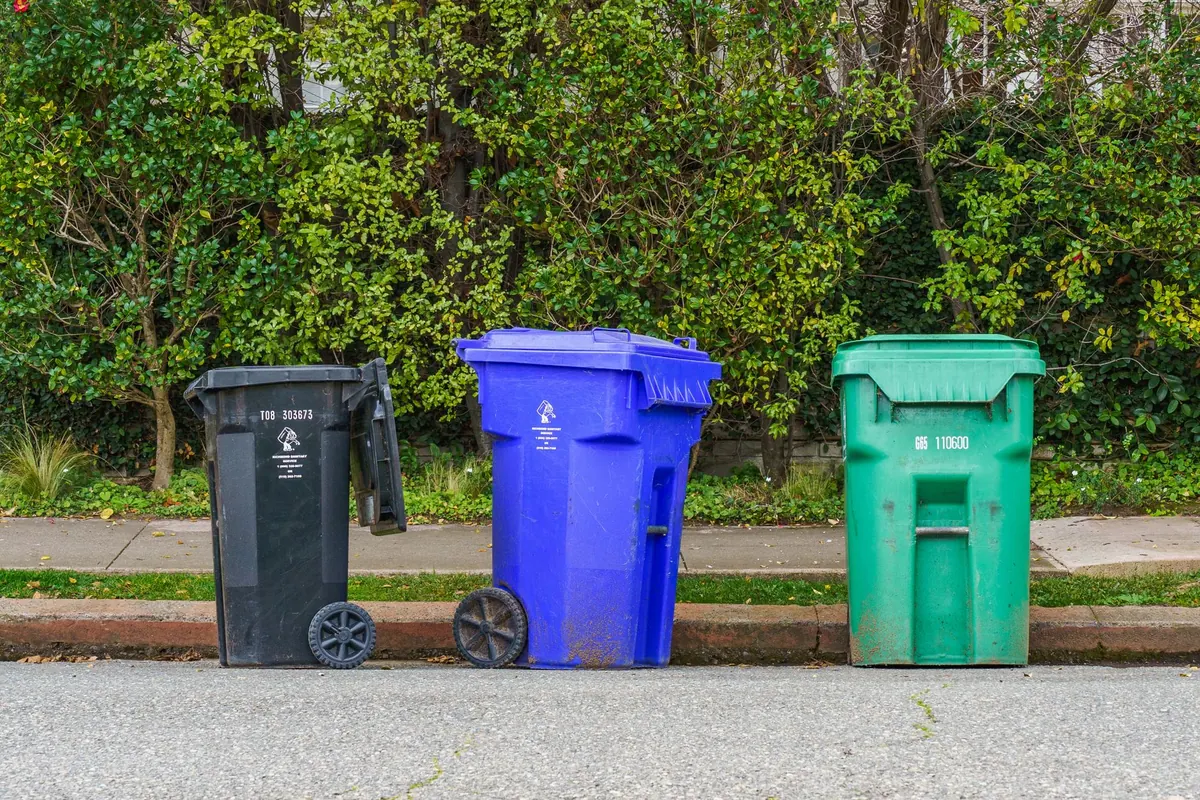
Because collection is a district matter, bin colours, container types and collection frequencies have never been uniform. Some councils use a blue-lidded wheeled bin for mixed recycling; others expect glass in a separate box or a reusable sack. Several Kent councils have already introduced food waste rounds, while others are still phasing them in through 2025 and 2026.
So ignore the advice your friend in the next town gives you. What matters is the calendar and guidance published by your council, for your postcode.
Food waste: the biggest change for most households
A weekly food round changes how a kitchen works. The good news is that it takes almost everything edible, which removes a lot of the guesswork. Cooked leftovers, bones, dairy, banana skins, eggshells, tea bags, coffee grounds and the sad lettuce at the back of the fridge can all go in.
Making the caddy work in a busy kitchen
Most councils supply a small indoor caddy and a larger outdoor container. A few practical habits make the difference between a system that works and one that smells.
- Line the indoor caddy with a compostable liner or a sheet of newspaper — but only if your council accepts liners. Some ask for food waste loose.
- Empty it every day or two, especially in summer, rather than letting it sit until collection day.
- Drain liquid before scraping plates. Wet food waste is heavier, messier and more likely to leak.
- Freeze smelly items — fish skins, meat trimmings — in a bag and put them out on collection morning.
- Keep the outdoor bin in the shade with the lid properly closed, and rinse it out after emptying.
The things that still don't belong in recycling
Contamination is the quiet problem with kerbside recycling. A single bin full of the wrong items can mean an entire lorry load is rejected and sent for disposal, which wastes everyone's effort. These are the mistakes that turn up most often in Kent's recycling:
- Batteries and vapes. Never in any kerbside bin. They cause fires in collection vehicles and at waste facilities. Take them to a supermarket collection point or a household waste recycling centre.
- Greasy pizza boxes. Tear off the clean lid and recycle that; the oily base goes in the general waste or food waste.
- Pyrex, drinking glasses and mirrors. A different kind of glass from bottles and jars, and it contaminates the load.
- Bagged recycling. Put items loose in the bin. Staff at sorting facilities can't open bags safely, so they're pulled out.
- Black plastic trays and cling film. Usually not wanted. Check your council's list before adding them.
- Nappies, wipes and textiles. None of these are kerbside recyclable. Textiles can often go to a charity bank or a recycling centre instead.
- Shredded paper. Fine on its own but it jams sorting machinery. Most councils ask you to put it in a paper bag or compost it.
When you're genuinely unsure about an item, leave it out. One uncertain item in the general waste causes far less trouble than a whole bin of contaminated recycling.
Sorting habits that save time
Small routines beat good intentions. Rinse jars and tins as you finish with them rather than leaving a pile for the weekend. Keep a carrier bag or small box by the door for batteries and vapes so they get taken to the shop rather than dropped in the wrong bin. Flatten cardboard so it doesn't wedge itself in the container and block everything else.
If you rent, live in a flat or share a communal bin store, the rules can be different again — ask your landlord or managing agent which containers your building has and who is responsible for putting them out. Communal bins are also where contamination builds up fastest, so it's worth mentioning to neighbours when a new stream is added.
Check your council's guidance before your next collection day
Before you change anything at home, spend five minutes on your district council's website and search for bin collections using your postcode. You'll get the current collection day, a list of what's accepted, and details of any new food waste service. Many Kent councils also publish downloadable bin hangers and offer email or app reminders when collection days move — useful around bank holidays, when rounds shift and bins get missed.
If you have garden waste, check whether your subscription needs renewing for the new year, and if you're ever stuck with an unusual item, Kent County Council's recycling centre pages list what the tips accept. Rules will keep settling down as the 2026 deadline approaches, so it's worth rechecking once a year rather than assuming last year's leaflet still applies.
Photo: Robert So / Pexels