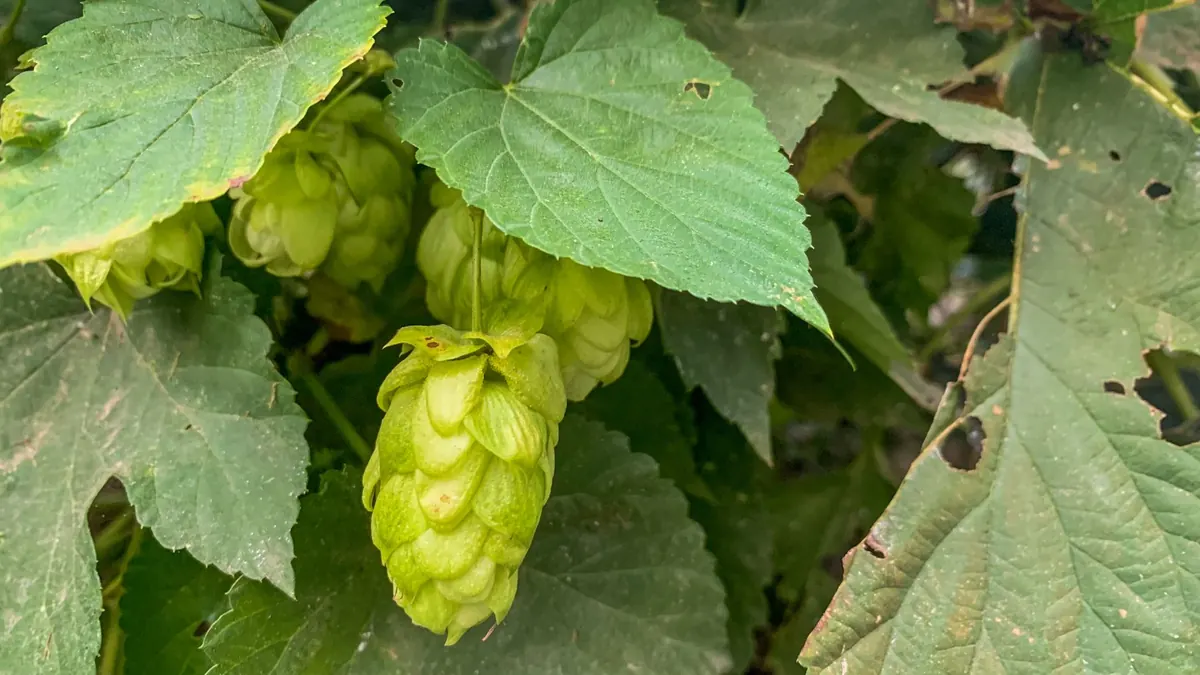
Kent's hop gardens are at their best in a short, urgent window at the end of summer. By late August the bines have climbed the wirework, the cones are papery and fragrant, and for three or four weeks the lanes of the Weald smell of green hops, cut grass and diesel from the picking machines. If you have ever wanted to watch hops being stripped from the bine, stand beside a working oast with the kiln firing, or drink a beer brewed with hops cut that morning, this is the stretch of the calendar to plan around. Here is what happens when, and where to see it.
The season, roughly
Hop harvest in Kent usually begins in the last week of August and runs into mid-September, though the exact start shifts with the weather and the variety. Early hops come off first; the classic East Kent Goldings and Fuggles tend to follow. A haulm grows quickly and is cut, stripped and dried in a matter of days, which is why the whole season feels compressed.
The stages are worth knowing before you visit, because what you see depends on where you stand in the cycle:
- Picking. Bines are cut at the base and hauled through a picking machine that separates cones from leaf and stem.
- Drying. Wet hops go into the kiln, usually on the upper floor of an oast, and are dried slowly for roughly a day.
- Cooling and pressing. Dried hops rest on the cooling floor, then are pressed into large pockets for storage or sale.
- Green hop brewing. Some hops skip the kiln entirely and go into the copper within hours of picking.
Faversham Hop Festival
The county's best-known hop celebration is in Faversham, traditionally on the first weekend of September. The town centre closes to traffic, hop garlands go up, and there is a procession, morris sides, street music and a lot of very full pubs. It is genuinely good fun, and genuinely busy.
Practical points: check the current dates on the festival's own pages before you travel, arrive before mid-morning if you want to park anywhere near the centre, and use the park-and-ride or the train if you can. The streets around the Market Place and Abbey Street are where most of the action happens. Families tend to do better earlier in the day, before the afternoon crowds build.
Green hop beers and brewery taprooms
Green hop beer is the harvest's best-kept pleasure: brewed with undried hops, it has a fresh, resinous, almost grassy character that fades fast. Several Kent breweries make one each year, and the Kent Green Hop Beer Fortnight, which generally runs from late September into early October, is when many of them appear together. Dates vary, so watch brewery social feeds rather than relying on last year's diary.
Two things to remember. First, green hop beer is a fresh product, best drunk within days of release, so buy it close to when you plan to drink it. Second, taprooms often have limited opening hours outside the season, so check before making a long drive. If you are the driver, Kent's rural buses are sparse; sort out a lift or a taxi number in advance.
Farm tours and hop gardens
A handful of working hop farms in the Weald open their gates during harvest, and a tour is the closest most of us will get to understanding how much labour sits behind a pint. Hukins Hops at Horsmonden is one of the best-known growers in the county and has run visitor events in the past; smaller farms around Marden, Biddenden and Goudhurst sometimes do the same. Availability changes year to year and tours usually sell out, so booking ahead is essential rather than optional.
What to ask before you book
- Will the oast be firing while we visit, or is it a static tour?
- Is the site a working farm with machinery and livestock moving about?
- Are dogs allowed, and must they be on leads?
- How long does the tour last, and how much of it is outdoors?
- Is there anywhere undercover if it rains?
Wear boots or stout shoes. Hop gardens are dusty, stubble is sharp, and there is usually nowhere comfortable to sit down mid-tour.
Oast houses: what you are looking at
The oast is the icon of this part of Kent, and once you know the anatomy you will spot variations everywhere. A round or square kiln sits under a conical or pyramidal roof, topped by a cowl that turns with the wind to draw air up through the drying hops. The white-painted wooden fantail at the back drives the cowl. Below the kiln is the fire, above it the drying floor, and alongside it the stowage where hops were cooled and pressed.
Most oasts in Kent are now houses, holiday lets or offices, and few retain their kilns. To see one in working order, look to the open-air museums and heritage sites that keep theirs in use. Kent Life near Maidstone has a hop garden and oast as part of its farm collection, and the Hop Farm at Paddock Wood has a cluster of oasts that tells the story of the industry. Sissinghurst's estate also has oast buildings in its grounds. If you simply want the view, drive or walk the lanes between Goudhurst, Horsmonden, Frittenden, Smarden, Marden, Staplehurst and Brenchley, where they rise out of the orchards one after another.
A word on manners: hop gardens are private land, often strung with wire at head height, and growers are busy people in September. Admire from footpaths and public lanes, and never walk into a garden to take a photograph.
Planning your hop harvest trip
Treat the harvest as a moving target. Dates shift, tours fill, and a farm that welcomed visitors last year may be mid-build this year. Confirm everything a day or two before you set out.
- Go midweek if you can. Weekends at the big attractions and the festival are far busier.
- Build in a pub stop. A pint of green hop beer in a Weald village pub is the point of the trip as much as the oast is.
- Take cash for small sites and for honesty boxes at farm gates selling hops, apples, plums and cobnuts.
- Dress for mud and dust, and keep an eye on children near machinery and kiln steps.
- Buy your green hop beer at the end of the day, keep it cool, and drink it soon.
One final note: if you plan to drink, arrange your transport first. Rural Kent taxis book up quickly on festival weekends, and the lanes between hop gardens are narrow, unlit and full of slow-moving farm vehicles. A little forward planning is all it takes to enjoy the best few weeks of the Kentish year.
Photo: Diana ✨ / Pexels